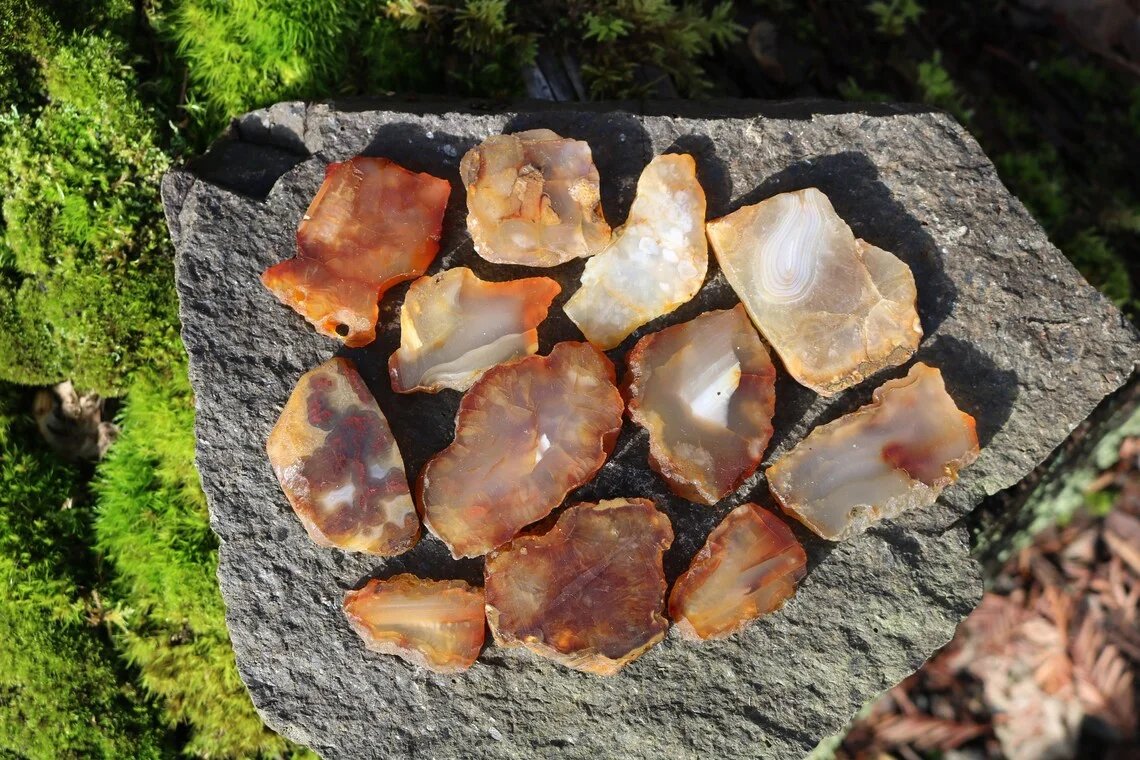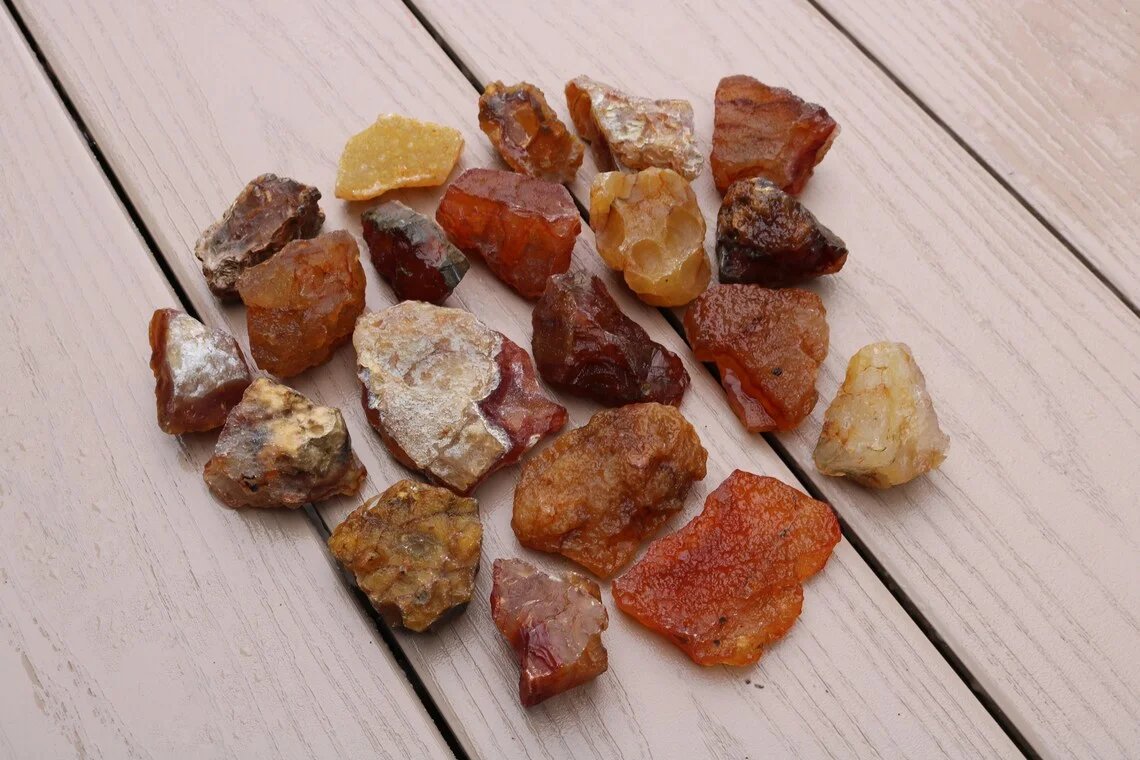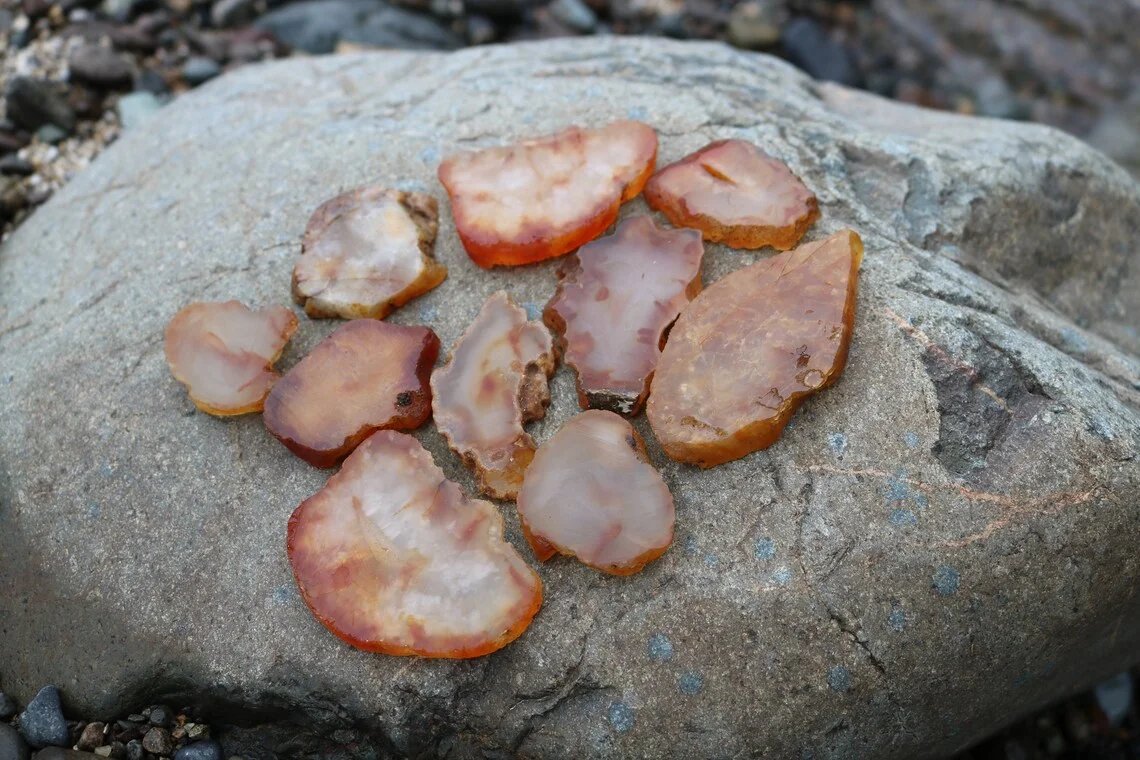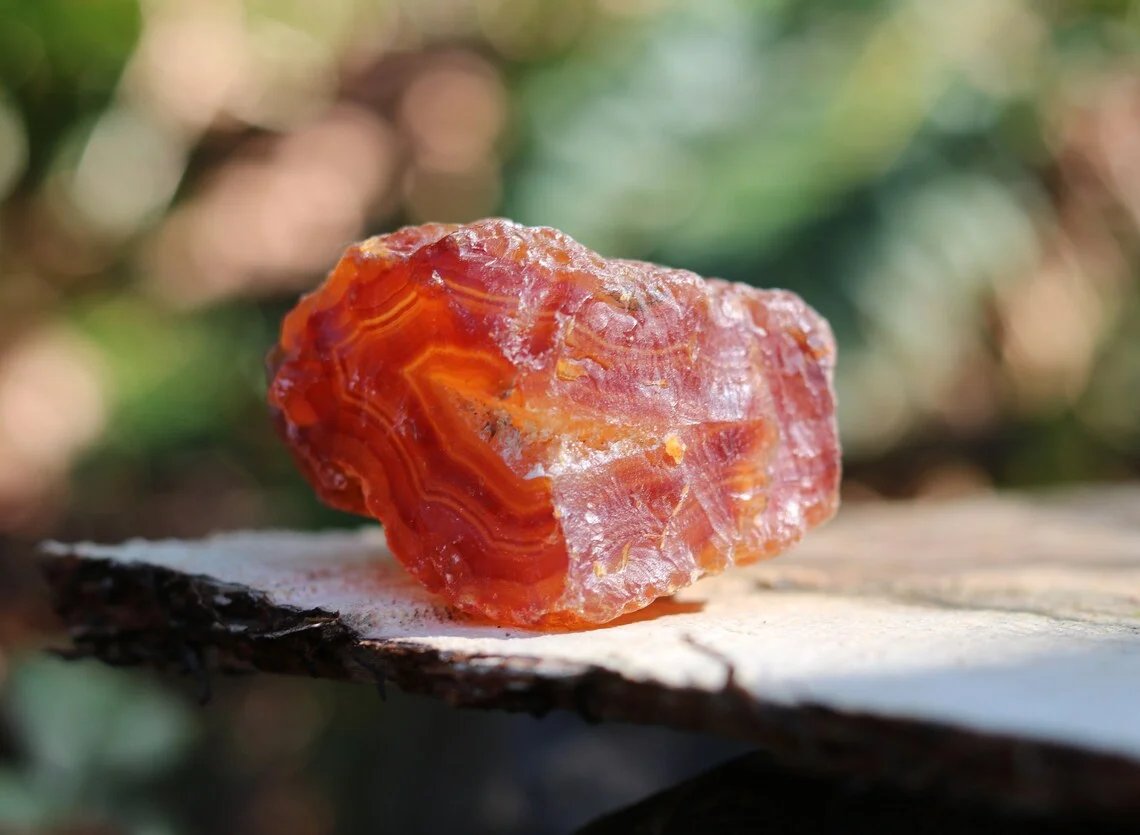
Learn the 5 key signs of fake or heat-treated carnelian. Discover why Washington State agates offer a natural alternative to the mass-market treated stones found online.
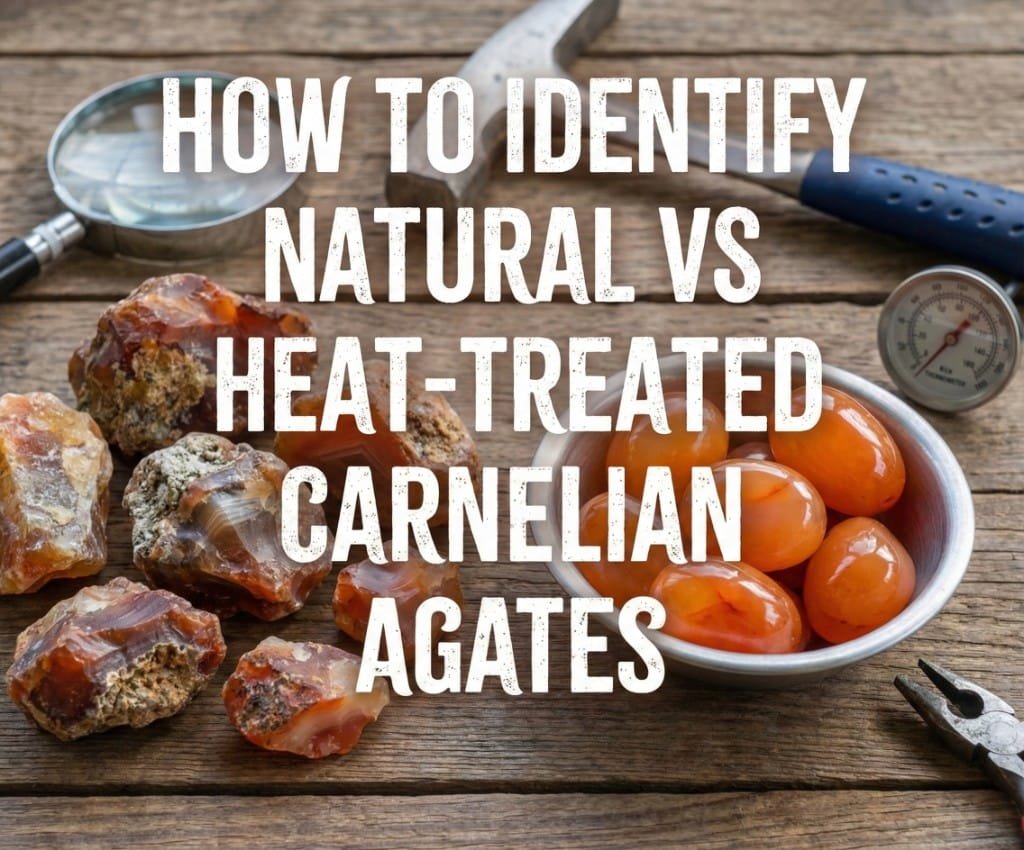
You walk into a rock shop and see a bin full of bright orange stones. They look perfect. Maybe they look too perfect. This is the biggest issue new collectors face when buying Carnelian. If you're new to identifying carnelian agates, start with our guide on How Do I Identify a Carnelian Agate to learn the basics.
The sad truth is that much of the market is flooded with imposters. Suppliers often take boring grey agate and soak it in chemicals or bake it in high temperature ovens to force that red color. It might look pretty at first glance, but it ruins the natural history of the stone.
If you care about the real geology behind your collection, you need to know how to spot the difference.
There is a distinct magic to holding a stone that was painted by volcanic fire rather than a laboratory kiln. The deep reds and glowing ambers of a true carnelian agate tell a story that is millions of years old. It is a story of slow cooling lavas and iron-rich waters filtering through ancient bedrock.
However, the modern gemstone market is often less about history and more about efficiency. It is cheaper to strip-mine grey chalcedony and boil it in a chemical bath than it is to hunt for the rare, naturally red pockets of gemstone quality material. This has created a landscape where the average buyer has likely never actually seen a real, untreated carnelian agate.
We are here to change that.
This guide will walk you through the science of how these stones form, the industrial tricks used to fake them, and the five specific visual tests you can use to ensure your collection is authentic.
The Science of Real Carnelian: How Nature Makes Red
To understand the fake, you first have to understand the real thing.
Carnelian is a variety of silica mineral known as chalcedony. In its purest form, silica is clear like window glass or white like quartz. So where does that famous red color come from?
The answer is iron.
Specifically, it is iron oxide. This is the same compound you know as rust. When ancient lava flows cooled in the Pacific Northwest millions of years ago, they left behind gas bubbles and voids in the basalt rock. Over eons, groundwater rich in silica and iron trickled into these cavities.
This was not a fast process. It happened layer by microscopic layer.
As the silica gel hardened into stone, it trapped those trace amounts of iron inside the crystal structure itself. Sometimes the iron oxidized completely, turning the stone a deep, blood red. Other times it only partially oxidized, creating soft ambers, honeys, and apricots.
This natural process creates a stone that is rarely uniform. Nature is chaotic. You will see clouds of color, soft hazes of transparency, and intricate banding that looks like a painting. The color is "locked" into the stone because it is part of the stone's molecular recipe.
The Industrial Shortcut: How Factories "Cook" Stone
The commercial market does not have the patience for geology. They want bright red stones, and they want millions of them, all identical.
To achieve this, large-scale gem producers primarily in Brazil, India, and China use a process called heat treatment.
They start with common grey agate. This material is abundant and cheap. It has very little iron oxide in it, or the iron is in a state that does not show color. To fix this, they use two main methods.
Method 1: Simple Heating
If the grey agate has enough iron potential, they simply bake it. The stones are placed in industrial kilns and heated to temperatures often exceeding 400 or 500 degrees Fahrenheit. This intense heat speeds up the oxidation process that would naturally take millions of years. It effectively "rusts" the iron inside the stone instantly.
Method 2: Chemical Dyeing
If the stone does not have enough iron, they add it. The agates are soaked in a solution of ferrous nitrate for weeks. This chemical seeps into the pores of the rock. Once the stone is saturated, it is heated. The heat turns the ferrous nitrate into iron oxide, turning the stone red.
While the chemical result is technically "iron oxide" in both cases, the visual result is very different from what nature produces. The color is often harsh, flat, and concentrated in unnatural ways.
The 5-Point Inspection Checklist
You do not need a degree in geology to spot these fakes. You just need a sharp eye and a bright light. Next time you are browsing a gem show or looking at photos online, run through this mental checklist.
1. The Spiderweb Dye Test
This is the easiest way to spot a dyed stone.
Agate is porous, but it is not a sponge. It has tiny micro-fractures and cracks that are often invisible to the naked eye. When a stone is soaked in dye or chemical salts, the liquid flows into these cracks first.
When the stone dries or is fired, the pigment gets stuck in those fractures.
What to look for: Hold the stone up to your eye or use a magnifying glass. Look at the surface texture. If you see dark red veins that look like a spiderweb, that is dye. The color should not look like it is bleeding into the cracks. In a natural stone, a fracture might be clear, white, or filled with quartz, but it will rarely be darker than the surrounding stone. If the cracks are redder than the rest of the rock, walk away.
2. The Candy Corn Banding
Natural agate is famous for its banding. These are the concentric rings that show how the layers of silica were deposited.
In a natural Washington carnelian, these bands are subtle. You might see a drift of honey-orange fading into a lighter cream, then back to a deep amber. The transition is soft. It looks like watercolor paint bleeding on wet paper.
Heat treated stones often have what we call "Candy Corn Banding."
What to look for: Look for stark, high-contrast lines. If you see a bright, burnt-orange band right next to a stark white band with zero transition, it is likely heat treated. The heating process turns the iron-rich layers extremely dark but leaves the iron-poor silica layers bright white. Nature rarely paints with such hard, aggressive lines. If it looks like a traffic cone or a piece of candy, it was likely cooked.
3. The Translucency and Glow
This is the most beautiful quality of real carnelian, and the hardest one for factories to fake.
Real carnelian has a "gel-like" quality. When you hold it up to the sun, the light should pass through it, but it should look cloudy and thick, like looking through honey or amber. It glows from within.
Heat treatment changes the crystal structure of chalcedony. It often makes the stone more opaque.
What to look for: Hold the stone up to a strong light source.
- Natural: You will see a warm, glowing light that seems to diffuse through the whole stone. You might see internal "clouds" or mossy shapes floating inside.
- Treated: The stone often blocks the light entirely, or the light only passes through the very edges. If the stone looks like a solid block of plastic orange that absorbs light rather than transmitting it, be suspicious.
4. The Temperature Test
This is a quick physical check you can do if you are buying in person.
Natural quartz and agate are excellent thermal insulators. This means they do not conduct heat well. When you pick up a piece of real stone, it should feel cold to the touch, even in a warm room. It takes a long time for the heat of your hand to warm up the stone.
What to look for: Pick up the stone. Does it feel instantly warm? If it feels room temperature or warms up in seconds, it might be glass or plastic sold as "carnelian." While this does not help you distinguish between real stone and heat-treated stone (since both are stone), it effectively weeds out the cheap glass fakes that are common on auction sites.
5. The "Too Uniform" Rule
Nature is perfectly imperfect.
When we hunt for agates in the rivers of Washington, we rarely find a stone that is one single, solid color. We find stones with clear centers and red rims. We find stones with black dendrites (mineral ferns) growing inside them. We find stones that shift from yellow to red to brown.
What to look for: If you are looking at a strand of beads or a tumbled stone and it is a perfect, uniform, bright red all the way through, it is almost certainly treated. Natural carnelian has zoning. It has lighter spots and darker spots. Uniformity is a hallmark of mass production, not natural formation.
Why Does It Matter?
You might be asking yourself, "If it looks red and it is hard enough for jewelry, who cares if it was heated?"
It matters because of value and vibration.
From a collector's standpoint, you are paying for rarity. Grey agate is worth pennies. Natural, gem-grade red carnelian is rare. If you pay the price for a rare natural gemstone but receive a cooked piece of common gravel, you have been scammed. It is like buying a print and being told it is an original painting.
From a metaphysical perspective, many people believe that the energy of the stone comes from its earth origins. A stone that has been chemically soaked and flash-fried in a factory carries a different energy than one that slowly developed its color in the crushing depths of the earth over millions of years.
The Washington Difference
This brings us to why we do what we do.
At Agate Outpost, we are obsessed with the real thing. The Pacific Northwest, and specifically Washington State, is home to some of the highest quality carnelian on the planet. Learn more about What Makes Washington Carnelian Agates Unique and why our local stones are so special.
Our stones are not mined by heavy machinery in a foreign country. They are collected by hand from river bars and clay banks. We hike out into the rain, sift through the gravel, and pick them up one by one.
When you see a carnelian from us, you are seeing the stone exactly as the earth made it. We tumble them to give them a shine, or we slice them to show their pattern, but we never heat, dye, or alter the color.
The deep reds you see in our inventory are the result of volcanic activity that happened before humans even walked the earth. The soft oranges are from natural iron deposits. Every flaw, every cloud, and every band is a certificate of authenticity signed by nature itself.
Conclusion
The next time you are shopping for carnelian, do not be afraid to ask questions. Ask the seller where the stone was mined. Ask if it has been treated. If they cannot tell you the mine location or the origin, that is a red flag.
Your collection deserves the truth. It deserves stones that are as unique and complex as the geology that formed them.
If you are ready to start a collection of genuine, untreated, and locally sourced carnelian, we invite you to browse our shop. We list every stone with clear photos so you can apply the tests you learned in this guide.
You will see the soft banding. You will see the glowing translucency. You will see the truth.
Explore our collection of Natural Washington Carnelian on Etsy